Wednesday, April 23, 2014

lyrics full naat (mera to sub kuch mera nabi hay )


Woh meri manzil bhi, hamsafar bhi
Wo saamne bhi, paas-e-nazar bhi
Wohi mujhe duur se Pukaare, ussi ki parchaae ruuh par bhi
Woh rang mera, woh meri khushbuu
Mein uski mutthi ka ek jugnu, woh mere andarr ki roshni he

Mera to sab kuch mera Nabi he

Kamaal-e-Khalaaq Zaat uss Ki
Bashr Nahi Azmat-e-Bashr hai
Mera Payambar Azeem Tar Hai

Woh Rahmatallil Alameen aur tu saraapa bughz-o-kee
Phir kis tara aaye yaqeen, tu bhi bashar woh bhi bashar

Apne warga kehn waaleya

Tu shar he, woh Khair-ul-bashar
Yaksaan kahaa hein khair-o-shar
He faraq in mein kis qadar
Tu bhi bashar, woh bhi bashar

Tu reengta he khaak per aur Arsh par unka guzar
Ab dil mein khud insaaf kar, tu bhi bashar, woh bhi bashar

Ab tujhe kya karna chahiye

Hat-dharmiyo ko chor kar, zauq-e-takabbur tore kar
keh dono haatho ko jore kar, woh Noor-e-Haqq aur mein bashar

Bashr Nahi Azmat-e-Bashr Hai
Mera Payambar Azeem Tar Hai

Saturday, April 19, 2014

The Pleasures of Paradise part 1


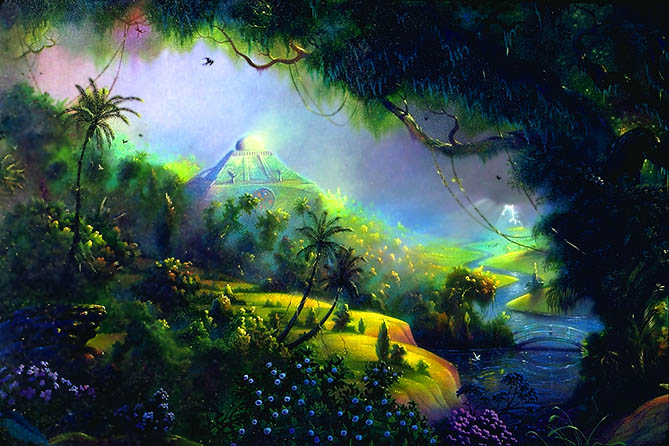
The reality of Paradise is something which people will never be able to understand until they actually enter it, but God has shown us glimpses of it in the Quran.  He has described it as a place essentially different to the life of this world, both in the very nature and purpose of life, as well as the types of delights which people will enjoy therein.  The Quran tells people about Paradise, which God offers to them, describes its great blessings, and proclaims its beauties to everyone.  It informs people that Paradise is one of two ways of life prepared for them in the afterworld, and that every good thing will be theirs in Paradise to a degree that surpasses our present ability to imagine.  It also shows that Paradise is a place where all blessings have been created perfectly and where people will be offered everything their souls and hearts will desire, and that people will be far removed from want and need, anxiety or sadness, sorrow and regret.  Every kind of beauty and blessing exists in Paradise and will be revealed with a perfection never seen or known before.  God has prepared such blessings there as a gift, and these will be offered only to people with whom He is pleased.

But what is the nature of these delights in Paradise, and how will it be different from the delights of this world?  We will try to highlight a few of these differences.

Pure delight without pain and suffering

While people in this world experience some delight, they also face much toil and suffering.  If one was to scrutinize the life which they live, they will find that the amount of hardship they face is much more than the ease and comfort.  As for the life of the Hereafter, there will be no hardship nor suffering in it, and people will live therein in pure joy and delight.  All the causes of sorrow, pain and suffering which people experience in this life will be absent in the Hereafter.  Let’s take a look at some of these causes.

Wealth

When one thinks of success in this life, they usually conjure the image of big houses, fine jewelry and clothing, and expensive cars; financial stability is seen to be the key to a happy life.  To most people, success is inseparably related to wealth, even though this is the furthest from the truth.  How many times have we seen the wealthiest of people living such miserable lives, that it sometimes even leads them to commit suicide!  Wealth is something which humans in their very nature desire at any cost, and this desire has been created for a great and wise purpose.  When this desire is not satiated, it causes some extent of grief in a person.  For this reason, God has promised the inhabitants of Paradise that they will have all that they imagined as far as wealth and belongings are concerned, both for those who were extremely poor, experiencing even hunger and thirst, to those well-to-do but who desired even more.  God gives us a glimpse of this when he says:

“... there will be there all that the souls could desire, all that the eyes could delight in …” (Quran 43:71)

“Eat and drink at ease for that which you have sent forth (good deeds) in days past!” (Quran 69:24)

“… They will be adorned therein with bracelets of gold, and they will wear green garments of fine silk and heavy brocade.  They will recline therein on raised thrones.  How good [is] the recompense!  How beautiful a couch [is there] to recline on!” (Quran 18:31)

Disease and Death

Another cause of pain and suffering in this life is the death of a loved one or disease, which are both non-existent in Paradise.  None will feel any sickness or pain in Paradise.  The Prophet Muhammad, may the mercy and blessings of God be upon him, said about the people of Paradise:

“They will never fall ill, blow their noses or spit.” (Saheeh Al-Bukhari)

None will die in Paradise.  All shall live eternally enjoying the pleasures therein.  The Prophet Muhammad said that a caller will call out in Paradise when people enter it:

“Indeed may you be healthy and never be sick again, may you live and never die again, may you be young and never grow feeble again, may you enjoy, and never feel sorrow and regret again.” (Saheeh Muslim)

Social Relationships

As for the remorse felt due to a rift in personal relationships, people will never hear any evil or hurting comments or speech in Paradise.  They will only hear good words and words of peace.  God says:

“They will not hear therein ill speech or commission of sin.  But only the saying of: Peace! Peace!” (Quran 56:25-26)

There will be no enmity between people nor ill-feelings:

“And We shall remove from their breasts any (mutual) hatred or sense of injury (which they had, if at all, in the life of this world)…” (Quran 7:43)

The Prophet said:

“There will be no hatred or resentment among them, their hearts will be as one, and they will glorify God, morning and evening.” (Saheeh Al-Bukhari)

People will have the best of companions in the Hereafter, who were also the best people in the world:

“And whoever obeys God and the Messenger – those will be with the ones upon whom God has bestowed favor – of the prophets, the steadfast affirmers of truth, the martyrs and the righteous.  And excellent are those as companions!” (Quran 4:69)

The hearts of the people of Paradise will be pure, their speech will be good, their deeds righteous.  There will be no hurtful, upsetting, offensive or provocative talk there, for Paradise is free of all worthless words and deeds. If we were to discuss all the causes for anguish in this life, we would surely find its absence or opposite to be true in Paradise.

The Pleasures of Paradise part 2


The Pleasures of this world are transient whilst the joys of the hereafter are lasting and eternal.  In this life when a person enjoys something, it is only a short while before they get bored with it and proceed to search for something they feel is better, or they may not feel a need for it altogether.  As for the delights of Paradise, a person will never feel bored with anything, but rather, its goodness will increase each time they indulge in it.

Also, the life of this world is very short.  Humans only live on this earth for a short while, and very few people reach the age of seventy.

“…Say: Short is the enjoyment of this world.  The Hereafter is (far) better for him who fears God...” (Quran 4:77)

As for Paradise, people will live forever.  God says:

“...its provision is eternal and so is its shade…” (Quran 13:35)

“What is with you must vanish, and what is with God will endure …” (Quran 16:96)

“(It will be said to them): This is Our Provision, which will never finish” (Quran 38:54)

Superior Delights

The delights of the people of Paradise, such as their clothing, food, drink, jewelry and palaces, will be far superior to their counterparts in this world.  There is in fact no room for comparison, as even the smallest space in Paradise is better than this world and all that is in it.  The Prophet Muhammad, may the mercy and blessings of God be upon him, said:

“The space of the bow of any one of you in Paradise is better than all that the sun rises upon” (Mishkaat al-Masaabeeh 3/85, no. 5615)

Free from all Impurities

Paradise is free from all the impurities of this world.  Eating and drinking in this life results in the need for excretion and its associated unpleasant odors.  If a person drinks wine in this world, he loses his mind.  Women in this world menstruate and give birth, which are sources of pain and hurt.  Paradise is free from all of these discomforts: its people will not urinate, defecate, spit or suffer from catarrh.  The wine of Paradise, as described by its Creator, is:

“Crystal-white, delicious to those who drink (thereof), free from intoxication, nor will they suffer intoxication therefrom” (Quran 37:46-47)

The water of Paradise does not become brackish, and its milk never changes in flavor:

“...rivers of water incorruptible; rivers of milk of which the taste never changes...” (Quran 47:15)

The women of Paradise are pure and free from menstruation, postnatal bleeding and all the other impurities suffered by women in this world, and all are free from stool and feces.  God says:

“...and they shall have therein purified mates…” (Quran 2:25)

The prophet answered a person when they asked how the people of Paradise will relieve themselves:

“They relieve themselves by perspiring through their skins, and its fragrance will be that of musk, and all stomachs will have become lean.” (ibn Hibbaan)

What we have mentioned has been a mere comparison in order to understand the nature of Paradise, but as God said, its delights are truly hidden:

“No person knows what is kept hidden for them of joy, as a reward for what they used to do.” (Quran 32:17)

Paradise: There is Nothing Like It

The delights of Paradise surpass the imagination and defy description.  They are like nothing known to the people of this world; no matter how advanced we may become, what we achieve is as nothing in comparison with the joys of the Hereafter.  As is mentioned in several reports, there is nothing like Paradise:

“It is sparkling light, aromatic plants, a lofty palace, a flowing river, ripe fruit, a beautiful wife and abundant clothing, in an eternal abode of radiant joy, in beautiful soundly-constructed high houses”. (Ibn Maajah, Ibn Hibbaan)

The Sahabah asked the Prophet about the buildings of Paradise and he replied with a wonderful description:

“Bricks of gold and silver, and mortar of fragrant musk, pebbles of pearl and sapphire, and soil of saffron.  Whoever enters it is filled with joy and will never feel miserable; he will live there forever and never die; their clothes will never wear out and their youth will never fade.” (Ahmad, at-Tirmidhi, ad-Daarimee)

God says:

“And when you look there (in Paradise) you will see a delight (that cannot be imagined), and a great dominion.” (Quran 76:20)

What God has kept hidden from us the delights of Paradise is beyond our ability to comprehend.  The Prophet said that God said:

“I have prepared for My slaves what no eye has seen, no ear has heard and no human heart can imagine.”  Recite if you wish:

“No person knows what is kept hidden for them of joy as a reward for what they used to do.” (Quran 32:17)

In another report:

“Never mind what God has told you; what He has not told you is even greater.” (Saheeh Muslim)

In other articles, we will attempt to mention some of the specific details of Paradise and the delights therein described to us by God and His last Prophet.

The Religion of Islam

The Religion of Islam

The first thing that one should know and clearly understand about Islam is what the word "Islam" itself means. The religion of Islam is not named after a person as in the case of Christianity which was named after Jesus Christ, Buddhism after Gotama Buddha, Confucianism after Confucius, and Marxism after Karl Marx. Nor was it named after a tribe like Judaism after the tribe of Judah and Hinduism after the Hindus. Islam is the true religion of "Allah" and as such, its name represents the central principle of Allah's "God's" religion; the total submission to the will of Allah "God".

The Arabic word "Islam" means the submission or surrender of one's will to the only true god worthy of worship "Allah" and anyone who does so is termed a "Muslim", The word also implies "peace" which is the natural consequence of total submission to the will of Allah. Hence, it was not a new religion brought by Prophet Muhammad (peace be upon him) I in Arabia in the seventh century, but only the true religion of Allah re-expressed in its final form.

Islam is the religion which was given to Adam, the first man and the first prophet of Allah, and it was the religion of all the prophets sent by Allah to mankind. The name of God's religion Islam was not decided upon by later generations of man. It was chosen by Allah Himself and clearly mentioned in His final revelation to man. In the final book of divine revelation, the Qur’an, Allah states the following:

"This day have I perfected your religion for you, completed My favor upon you, and have chosen for you Islam as your religion". (Qur’an 5:3)

"If anyone desires a religion other than Islam (submission to Allah (God) never will It be accepted of Him" (Qur’an 3:85)

"Abraham was not a Jew nor Christian; but an upright Muslim." (Qur’an 3:67)

THE MESSAGE OF ISLAM

Since the total submission of one's will to Allah represents the essence of worship, the basic message of Allah's divine religion, Islam is the worship of Allah alone and the avoidance of worship directed to any person, place or thing other than Allah. Since everything other than Allah, the Creator of all things is Allah's creation; it may be said that Islam, in essence calls man away from the worship of creation and invites him to worship only its Creator. He is the only one deserving man's worship as it is only by His will that prayers are answered.

"You alone do we worship and from you alone do we seek help". (Qur’an 1:5)

Elsewhere, in the final book of revelation, the Qur’an, Allah also said:

"And your Lord says:"Call on Me and I will answer your (prayer)." (Qur’an 40:60)

It is worth noting that the basic message of Islam is that Allah and His creation are distinctly different entities. Neither is Allah His creation or a part of it, nor is His creation Him or a part of Him.

This might seem obvious, but, man's worship of creation instead of the Creator is to a large degree based on ignorance of this concept. It is the belief that the essence of Allah is everywhere in His creation or that His divine being is or was present in some aspects of His creation, which has provided justification for the worship of creation though such worship maybe called the worship of Allah through his creation. However, the message of Islam as brought by the prophets of Allah is to worship only Allah and to avoid the worship of his creation either directly or indirectly. In the Qur'an Allah clearly states:

"For We assuredly sent amongst every people a prophet,(with the command) worship me and avoid false gods " (Qur’an 16:36)

THE UNIVERSALITY OF ISLAM

Within the central principle of Islam and in its definition, (the surrender of one's will to God) lies the roots of Islam's universality. Whenever man comes to the realization that Allah is one and distinct from His creation, and submits himself to Allah, he becomes a Muslim in body and spirit and is eligible for paradise. Thus, anyone at anytime in the most remote region of the world can become a Muslim, a follower of God's religion, Islam, by merely rejecting the worship of creation and by turning to Allah (God) alone. It should be noted however, that the recognition of and submission to Allah requires that one chooses between right and wrong and such a choice implies accountability. Man will be held responsible for his choices, and, as such, he should try his utmost to do good and avoid evil. The ultimate good being the worship of Allah alone and the ultimate evil being the worship of His creation along with or instead of Allah. This fact is expressed in the final revelation as follows:

"Verily those who believe, those who follow the Jewish (Scriptures), the Christians and the Sabians any who believe In Allah and the last day, and work righteousness *hall have their reward with their Lord; They will not be overcome by fear nor grief (Qur’an 2:62).

If only they had stood by the law, the Gospel, and all the revelation that was sent to them from their Lord, they would have enjoyed happiness from every side. There Is from among them a party on the right course; but many of them follow a course that is evil". (Qur’an 5:66)


RECOGNITION OF ALLAH

The question which arises here is, "How can all people be expected to believe in Allah given their varying- backgrounds, societies and cultures? For people to be responsible for worshipping Allah they all have to have access to knowledge of Allah. The final revelation teaches that all mankind have the recognition of Allah imprinted on their souls, a part of their very nature with which they are created.

In the Qur’an 172-173; Allah explained that when He created Adam, He caused all of Adam's descendants to come into existence and took a pledge from them saying, Am I not your Lord? To which they all replied, " Yes, we testify to It:'

Allah then explained why He had all of mankind bear witness that He is their creator and only true God worthy of worship. He said, "That was In case you (mankind) should say on the day of Resurrection, "Verily we were unaware of all this." That is to say, we had no idea that You Allah, were our God. No one told us that we were only supposed to worship You alone. Allah went on to explain that it was also In case you should say, "Certainly It was our ancestors who made partners (With Allah) and we are only their descendants; will You then destroy us for what those liars did?" Thus, every child is born with a natural belief in Allah and an inborn inclination to worship Him alone called in Arabic the "Fitrah".

Prophets were sent, as was earlier mentioned, to every nation and tribe to support man's natural belief in Allah and man's inborn inclination to worship Him as well as to reinforce the divine truth in the daily signs revealed by Allah. Although, in most cases, much of the prophets' teachings became distorted, portions remained which point out right and wrong. Consequently, every soul will be held to account for its belief in Allah and its acceptance of the religion of Islam; the total submission to the will of Allah.

We pray to Allah, the exalted, to keep us on the right path to which He has guided us, and to bestow on us a blessing from Him, He is indeed the Most Merciful. Praise and gratitude be to Allah, the Lord of the worlds, and peace and blessings be on prophet Muhammad, his Family, his companions, and those who rightly follow them.

A Quick Introduction To Islam


The word "Islam" is an Arabic word which means "submission to the will of God". This word comes from the same root as the Arabic word "salam", which means "peace". As such, the religion of Islam teaches that in order to achieve true peace of mind and surety of heart, one must submit to God and live according to His Divinely revealed Law. The most important truth that God revealed to mankind is that there is nothing divine or worthy of being worshipped except for Almighty God, thus all human beings should submit to Him.


The word "Muslim" means one who submits to the will of God, regardless of their race, nationality or ethnic background. Being a Muslim entails willful submission and active obedience to God, and living in accordance with His message. Some people mistakenly believe that Islam is just a religion for Arabs, but nothing could be further from the truth. Not only are there converts to Islam in every corner of the world, especially in England and America, but by taking a look at the Muslim World from Bosnia to Nigeria, and from Indonesia to Morocco, one can clearly see that Muslims come from many various races, ethnic groups and nationalities. It is also interesting to note that in actuality, more than 80% of all Muslims are not Arabs - there are more Muslims in Indonesia than in the whole Arab World! So though even though it is true that most Arabs are Muslims, the large majority of Muslims are not Arabs. However, anyone who submits completely to God and worships Him alone is a Muslim.

Continuity of the Message:

Islam is not a new religion because "submission to the will of God", i.e. Islam, has always been the only acceptable religion in the sight of God. For this reason, Islam is the true "natural religion", and it is the same eternal message revealed through the ages to all of God's prophets and messengers. Muslims believe that all of God's prophets, which include Abraham, Noah, Moses, Jesus and Muhammad, brought the same message of Pure Monotheism. For this reason, the Prophet Muhammad was not the founder of a new religion, as many people mistakenly think, but he was the Final Prophet of Islam. By revealing His final message to Muhammad, which is an eternal and universal message for all of mankind, God finally fulfilled the covenant that He made with Abraham, who was one of the earliest and greatest prophets. Suffice it to say that the way of Islam is the same as the way of the prophet Abraham, because both the Bible and the Qur'an portray Abraham as a towering example of someone who submitted himself completely to God and worshipped Him without intermediaries. Once this is realized, it should be clear that Islam has the most continuous and universal message of any religion, because all prophets and messengers were "Muslims", i.e. those who submitted to God's will, and they preached "Islam", i.e. submission to the will of Almighty God.

The Oneness of God:

The foundation of the Islamic faith is belief in the Oneness of Almighty God - the God of Abraham, Noah, Moses and Jesus. Islam teaches that a pure belief in One God is intuitive in human beings and thus fulfills the natural inclination of the soul. As such, Islam's concept of God is straightforward, unambiguous and easy to understand. Islam teaches that the hearts, minds and souls of human beings are fitting receptacles for clear divine revelation, and that God's revelations to man are not clouded by self-contradictory mysteries or irrational ideas. As such, Islam teaches that even though God cannot be fully comprehended and grasped by our finite human minds, He also does not expect us to accept absurd or demonstrably false beliefs about Him. According to the teachings of Islam, Almighty God is absolutely One and His Oneness should never be compromised by associating partners with Him - neither in worship nor in belief. Due to this, Muslims are required to maintain a direct relationship with God, and therefore all intermediaries are absolutely forbidden. From the Islamic standpoint, believing in the Oneness of God means to realize that all prayer and worship should be exclusively for God, and that He alone deserves such titles as "Lord" and "Savior". Some religions, even though they believe on "One God", do not make all of their worship and prayers for Him alone. Also, they also give the title of "Lord" to beings that are not All-Knowing, All-Powerful and Un-Changing - even according to their own scriptures. Suffice it to say that according to Islam, it is not enough that people believe that "God is One", but they must actualize this belief by proper conduct. In short, in the Islamic concept of God, which is completely based on Divine Revelation, there is no ambiguity in divinity - God is God and man is man. Since God is the only Creator and continual Sustainer of the Universe, He is transcendent above His creation - the Creator and the creature never mix. Islam teaches that God has a unique nature and that He is free from gender, human weaknesses and beyond anything which human beings can imagine. The Qur'an teaches that the signs and proofs of God's wisdom, power and existence are evident in the world around us. As such, God calls on man to ponder over the creation in order to build a better understanding of his Creator. Muslims believe that God is Loving, Compassionate and Merciful, and that He is concerned with the daily affairs of human beings. In this, Islam strikes a unique balance between false religious and philosophical extremes. Some religions and philosophies portray God as just an impersonal "Higher Power" who is uninterested, or unaware, of the life of each individual human. Other religions tend to give God human qualities and teach that He is present in His creation, by being incarnate in someone, something - or even everything. In Islam, however, Almighty God has clarified the truth by letting mankind know that He is "Compassionate", "Merciful", "Loving" and the "Answerer of Prayers". But He as also emphasized strongly that "there is nothing like unto Him", and that He is high above time, space and His creation. Finally, it should be mentioned that the God that Muslims worship is the same God that Jews and Christians worship - because there is only one God. It is unfortunate that some people mistakenly believe that Muslims worship a different God than Jews and Christians, and that "Allah" is just the "god of the Arabs". This myth, which has been propagated by the enemies of Islam, is completely false since the word "Allah" is simply the Arabic name for Almighty God. It is the same word for God which is used by Arabic-speaking Jews and Christians. However, it should be clarified that even though Muslims worship the same God as Jews and Christian, their concept of Him differs somewhat from the beliefs of other religions - mainly because it is based completely on Divine Revelation from God. For example, Muslims reject the Christian belief that God is a Trinity, not only becaue the Qur'an rejects it, but also because if this was God's true nature, He would have clearly revealed it to Abraham, Noah, Jesus and all of the other prophets.

The Qur'an:

The Arabic world "Al-Qur'an" literally means "the recitation". When used in regards to Islam, the word Qur'an means God's final message to mankind that was revealed to the Prophet Muhammad. The Qu'ran, sometimes spelled Koran, is the literal the word of God - as it clearly says time and time again. Unlike other sacred scriptures, the Qur'an has been perfectly preserved in both its words and meaning in a living language. The Qu'ran is a living miracle in the Arabic language; and is know to be inimitable in its style, form and spiritual impact. God's final revelation to mankind, the Qur'an, was revealed to the Prophet Muhammad over a period of 23 years. The Qur'an, in contrast to many other religious books, was always thought to be the Word of God by those who believed in it, i.e. it wasn't something decreed by a religious council many years after being written. Also, the Qu'ran was recited publicly in front of both the Muslim and non-Muslim communities during the life of the Prophet Muhammad. The entire Qur'an was also completely written down in lifetime of the Prophet, and numerous companions of the Prophet memorized the entire Qur'an word-for-word as it was revealed. So unlike other scriptures, the Qur'an was always in the hands of the common believers, it was always thought to be God's word and, due to wide-spread memorization, it was perfectly preserved. In regards to the teachings of the Qur'an - it is a universal scripture, and it is addressed to all of mankind, and not to a particular tribe or "chosen people". The message that it brings is nothing new, but the same message of all of the prophets - submit to Almighty God and worship Him alone. As such, God's revelation in the Qur'an focuses on teaching human beings the importance of believing in the Unity of God and framing their lives around the guidance which He has sent. Additionally, the Qur'an contains the stories of the previous prophets, such as Abraham, Noah, Moses and Jesus; as well as many commands and prohibitions from God. In modern times in which so many people are caught up in doubt, spiritual despair and "political correctness", the Qur'anic teachings offer solutions to the emptiness of our lives and the turmoil that is gripping the world today. In short, the Qur'an is the book of guidance par excellence.

The Prophet Muhammad May the Peace and Blessings of God be upon him:

Unlike the founders of many religious, the final prophet of Islam is a real documented and historical figure. He lived in the full light of history, and the most minute details of his life are known. Not only do Muslims have the complete text of God's words that were revealed to Muhammad, but they have also preserved his saying and teachings in what is called "hadith" literature. This having been said, it should be understood that Muslims believe that the Prophet Muhammad was only a man chosen by God, and that he is not divine in any way. In order to avoid the misguided wish to deify him, the Prophet Muhammad taught Muslims to refer to him as "God's Messenger and His Slave". The mission of the last and final prophet of God was to simply teach that "there is nothing divine or worthy of being worshipped except for Almighty God", as well as being a living example of God's revelation. In simple terms, God sent the revelation to Muhammad, who in turn taught it , preached it, lived it and put it into practice. In this way, Muhammad was more that just a "prophet" in the sense of many of the Biblical prophets, since he was also a statesman and ruler. He was a man who lived a humble life in the service of God, and established an all-encompassing religion and way of life by showing what it means to be an ideal friend, husband, teacher, ruler, warrior and judge. For this reason, Muslims follow him not for his own sake, but in obedience to God, because Muhammad not only showed us how to deal with our fellow human beings, but more importantly, he showed us how to relate to and worship God, worship Him in the only way pleasing to Him. Like other prophets, Muhammad faced a great deal of opposition and persecution during his mission. However, he was always patient and just, and he treated his enemies well. The results of his mission were very successful, and even though his mission started in one of the most backward and remotes places on earth, within a hundred years of the death of Muhammad, Islam had spread from Spain to China. The Prophet Muhammad was the greatest of all of God's prophets, not because he had new doctrines or greater miracles, but because the results of his mission have broght more human beings into the pure and proper belief in the One True God than any other prophet.

The Islamic Way of Life:

In the Holy Qur'an, God teaches human beings that they were created in order to worship Him, and that the basis of all true worship is God-consciousness. Since the teachings of Islamic encompass all aspects of life and ethics, God-consciousness is encouraged in all human affairs. Islam makes it clear that all human acts are acts of worship if they are done for God alone and in accordance to His Divine Law. As such, worship in Islam is not limited to religious rituals. The teachings of Islam act as a mercy and a healing for the human soul, and such qualities as humility, sincerity, patience and charity are strongly encouraged. Additionally, Islam condemns pride and self-righteousness, since Almighty God is the only judge of human righteousness. The Islamic view of the nature of man is also realistic and well-balanced. Human beings are not believed to be inherently sinful, but are seen as equally capable of both good and evil. Islam also teaches that faith and action go hand-in-hand. God has given people free-will, and the measure of one's faith is one's deeds and actions. However, human beings have also been created weak and regularly fall into sin. This is the nature of the human being as created by God in His Wisdom, and it is not inherently "corrupt" or in need of repair. This is because the avenue of repentance of always open to all human beings, and Almighty God loves the repentant sinner more than one who does not sin at all. The true balance of an Islamic life is established by having a healthy fear of God as well as a sincere belief in His infinite Mercy. A life without fear of God leads to sin and disobedience, while believing that we have sinned so much that God will not possibly forgive us only leads to despair. In light of this, Islam teaches that: only the misguided despair of the Mercy of their Lord. Additionally, the Holy Qur'an, which was revealed to the Prophet Muhammad, contains a great deal of teachings about the life hereafter and the Day of Judgment. Due to this, Muslims believe that all human beings will ultimately be judged by God for their beliefs and actions in their earthly lives. In judging human beings, Almighty God will be both Merciful and Just, and people will only be judged for what they were capable of. Suffice it to say that Islam teaches that life is a test, and that all human beings will be accountable before God. A sincere belief in the life hereafter is key to leading a well-balanced life and moral. Otherwise, life is viewed as an end in itself, which causes human beings to become more selfish, materialistic and immoral.

Islam for a Better Life:

Islam teaches that true happiness can only being obtained by living a life full of God-consciousness and being satisfied with what God has given us. Additionally, true "freedom" is freedom from being controlled by our base human desires and being ruled by man-made ideologies. This stands in stark contrast to the view of many people in the modern world, who consider "freedom" to be the ability to satisfy all of their desires without inhibition. The clear and comprehensive guidance of Islam gives human-beings a well-defined purpose and direction in life. In addition to being members of the human-brotherhood of Islam, its well-balanced and practical teachings are a source of spiritual comfort, guidance and morality. A direct and clear relationship with Almighty God, as well as the sense of purpose and belonging that ones feels as a Muslim, frees a person from the many worries of everyday life. In short, the Islamic way of life is pure and wholesome. It builds self-discipline and self-control thought regular prayer and fasting, and frees human-beings from superstition and all sorts of racial, ethnic and national prejudices. By accepting to live a God-conscious life, and realizing that the only thing that distinguishes people in the sight of God is their consciousness of Him, a person's true human dignity is realized.


alhamdu-lillah i am proud to be a muslim

I. The Meaning of Islam


Islam is derived from the Arabic root "Salema": peace, purity, submission and obedience. In the religious sense, Islam means submission to the will of God and obedience to His law.

Everything and every phenomenon in the world other than man is administered totally by God-made laws, ie. they are obedient to God and submissive to his laws, they are in the State of Islam. Man possesses the qualities of intelligence and choice, thus he is invited to submit to the good will of God and obey His law, ie, become a Muslim.

Submission to the good will of God, together with obedience to His beneficial Law, ie, becoming a Muslim, is the best safeguard for man's peace and harmony.

Islam dates back to the age of Adam and its message has been conveyed to man by God's prophets and messengers, including Abrahim, Moses, Jesus and Muhammad.

Islam's message has been restored and enforced in the last stage of the religious evolution by God's last prophet and messenger, Muhammad.

The word Allah in the Arabic language means God, or more accurately, The One and Only Eternal God, Creator of the Universe, Lord of all lords, King of all kings, Most Compassionate, Most Merciful. The word Allah to mean God is also used by Arabic speaking Jews and Christians.


                      II. Articles of Faith


A Muslim believes in One God, Supreme and Eternal, Infinite and Mighty, Merciful and Compassionate, Creator and Provider.

God has no father nor mother, no sons nor daughters. He has not fathered anyone nor was He fathered. None equal to Him. He is God of all mankind, not of a special tribe or race.

God is High and Supreme but He is very near to the pious thoughtful believers; He answers their prayers and helps them. He loves the people who love Him and forgives their sins. He gives them peace, happiness, knowledge and success.

God is the Loving and the Provider, the Generous and the Benevolent, the Rich and the Independent, the Forgiving and the Clement, the Patient and the Appreciative, the Unique and the Protector, the Judge and the Peace. God's attributes are mentioned in the Quran.

God creates in man the mind to understand, the soul and conscience to be good and righteous, the feelings and sentiments to be kind and humane. If we try to count His favours upon us, we cannot, because they are countless.

In return for all the great favours and mercy, God does not need anything from us, because he is Needless and Independent.

God asks us to know Him, to love Him and to enforce His Law for our own benefit and our own good.

A Muslim believes in all the Messengers and Prophets of God without any discrimination.

All messengers were mortals, human beings, endowed with Divine revelations and appointed by God to teach mankind. The Holy Quran mentions the names of 25 messengers and prophets and states that there are others. These include Noah, Abrahim, Ishmael, Isaac, Moses, Jesus, and Muhammad. Their message is the same and it is Islam and it came from One and the Same Source; God, and it is to submit to His will and to obey his law, ie, to become a Muslim.

A Muslim believes in all scriptures and revelations of God, as they were complete and in their original versions.

Revelations were given to guide the people to the right path of God. The Quran refers to the books revealed to Abrahim, Moses, David, Jesus and Muhammad.

Today, the books before the Quran do not exist in their original form. They are lost or corrupted or concealed. Weakness in the early period of Judaism and Christianity are partly responsible.

Today the Quran is the only authentic and complete book of God. No scholar has questioned the fact that the Quran today is the same as it was more than 1400 years ago. Muslims till today memorize the Quran word by word as a whole or in part.

God who revealed the Quran is protecting it from being lost, corrupted, or concealed.

A Muslim believes in the angels of God.

They are purely spiritual and splendid beings created by God. They require no food or drink or sleep. They have no physical desires nor material needs.

Angels spend their time in the service of God. Each charged with a certain duty. Angels cannot be seen by the naked eyes. Knowledge and truth are not entirely confined to sensory knowledge or sensory perception alone.

A Muslim believes in the day of Judgement.

This world as we know it will come to an end and the dead will rise to stand for their final and fair trial. Everything we do, say, make, intend and think are accounted for and kept in accurate records. They are brought up on the day of Judgement.

People with good records will be generously rewarded and warmly welcomed to God's Heaven. People with bad records will be fairly punished and cast into Hell.

The real nature of Heaven and Hell are known to God only, but they are described by God in man's familiar terms in the Quran.

If some good deeds are seen not to get full appreciation and credit in this life, they will receive full compensation and be widely acknowledged on the Day of Judgement.

If some people who commit sins, neglect God and indulge in immoral activities seem superficially successful and prosperous in this life, absolute justice will be done to them on the Day of Judgement.

The time of the Day of Judgement is only known to God and God alone.

A Muslim believes in "Qadaa" and "Qadar".

"Qadaa" and "Qadar" means the Timeless Knowledge of God and His power to plan and execute His plans. God is not indifferent to this world nor is He neutral to it.

God is Wise, Just and Loving and whatever He does must have a good motive, although we may fail sometimes to understand it fully.

We should have strong faith in God and accept whatever He does because our knowledge is limited and our thinking is based on individual consideration, whereas His knowledge is limitless and He plans on a universal basis.

Man should think, plan, and make sound choices, but if things do not happen the way he wants, he should not lose faith and surrender himself to mental strains or shattering worries.

A Muslim believes that the purpose of life is to worship God.

Worshipping God does not mean we spend our entire lives in constant seclusion and absolute meditation. To worship God is to live life according to His commands, not to run away from it.

To worship God is to know Him, to love Him, to obey His commands, to enforce His laws in every aspect of life, to serve His cause by doing right and shunning evil and to be just to Him, to ourselves and to our fellow human beings.

A Muslim believes that man enjoys an especially high ranking status in the hierarchy of all known creatures.

Man occupies this distinguished position because he alone is gifted with rational faculties and spiritual aspirations as well as powers of action.

Man is not a condemned race from birth to death, but a dignified being potentially capable of good and noble achievements.

A Muslim believes that every person is born "Muslim".

Every person is endowed by God with spiritual potential and intellectual inclination that can make him a good Muslim.

Every person's birth takes place according to the will of God in realization of His plans and in submission to His commands.

A Muslim believes that every person is born free from sin.

When the person reaches the age of maturity and if he is sane, he becomes accountable for all his deeds and intentions. Man is free from sin until he commits sin.

There is no inherited sin, no original sin. Adam committed the first sin, he prayed to God for pardon, and God granted Adam pardon.

A Muslim believes that man must work out his salvation through the guidance of God.

No one can act on behalf of another or intercede between him and God.

In order, to obtain salvation a person must combine faith and action, belief and practice. Faith without doing good deeds is as insufficient as doing good deeds without faith.

A Muslim believes that God does not hold any person responsible until he has shown him the Right Way.

If people do not know and have no way of knowing about Islam, they will not be responsible for failing to be Muslim. Every Muslim must preach Islam words and in action.

A Muslim believes that faith is not complete when it is followed blindly or accepted unquestioningly.

Man must build his faith on well-grounded convictions beyond any reasonable doubt and above uncertainty.

Islam insured freedom to believe and forbids compulsion in religion. (one of the oldest synagogues and one of the oldest churches in the world are in Muslim countries).
A Muslim believes that the Quran is the word of God revealed to prophet Muhammad through the Angel Gabriel.

The Quran was revealed from God on various occasions to answer questions, solve problems, settle disputes and to be man's best guide to the truth.

The Quran was revealed in Arabic and it is still in its original and complete Arabic version until today. It is memorized by millions.

A Muslim believes in a clear distinction between the Quran and the Traditions of the Prophet Muhammad.

Whereas the Quran is the word of God, the Traditions of Prophet Muhammad (his teachings, sayings, and actions) are the practical interpretations of the Quran.

Both the Quran and the Traditions of the Prophet Muhammad are the primary sources of knowledge in Islam.
16. A Muslim believes that everyperson is born "Muslim".• Every persons birth takes place according to the will of God in realization of His plans and in submission to His commands.
17. A Muslim believes that every person is born free from sin.• When the person reaches the age of maturity and if he is sane, he becomes accountable for all his deeds and intentions. Man is free from sin until he commits sin.
18. God does not hold any personresponsible until He has shown him theRight Way.• If people do not know and have no way of knowing about Islam, they will not be responsible for failing to be Muslim. Every Muslim must preach Islamic knowledge and in action.
19. A Muslim believes that faith is not completewhen it is followed blindly or acceptedunquestioningly.• Man must build his faith on well- grounded convictions beyond any reasonable doubt and above uncertainty.
20. A Muslim believes in a clear distinction between the Quran and the Traditions of the Prophet Muhammad.• Whereas the Quran is the word of God, the Traditions of Prophet Muhammad (SAW) (his teachings, sayings, and actions) are the practical interpretations of the Quran. Both the Quran and the Traditions of the Prophet Muhammad (SAW) are the primary sources of knowledge in Islam.
21. Application of Faith• God has laid down for a Muslim four major exercises of faith, some are daily, some weekly, some monthly, some annually and some are required as a minimum of once in a lifetime. These exercises of faith are to serve mans spiritual purposes, satisfy his human needs and to mark his whole life with a Divine touch. These major exercises of faith are:• Prayer (Salah)• Fasting (Seyam)• Charity Giving (Zakah)• Pilgrimage (Hajj)
22. The concept of worship in Islam ismisunderstood by many people includingsome Muslims• Worship is commonly taken to mean performing ritualistic acts such as prayers, fasting, charity, etc.• This limited understanding of worship is only one part of the meaning of worship in Islam. That is why the traditional definition of worship in Islam is a comprehensive definition that includes almost everything in any individuals activities. The definition goes something like this:• "Worship is an all inclusive term for all that God loves of external and internal sayings and actions of a person."
23. Islam is a Code of Life• Spiritual Life• Intellectual Life• Personal Life• Family Life• Social Life• Economical Life• Political Life• International Life